I have not locked the control surfaces zero-zero. Good idea. I'll give it a go tomorrow. That will eleminate a device problem as the cause of the un-commanded pitch-down.
M
-
Okay... so provided you shook the hell out of it and released any trapped air, we can eliminate trapped air as a cause. Have you tried locking the control surfaces like some others suggested and seeing what it does under speed in submerged trim?
Does the boat have the same tendency in surfaced trim?Leave a comment:
-
-
I also noticed that there are no guards in front of the bow planes.Leave a comment:
-
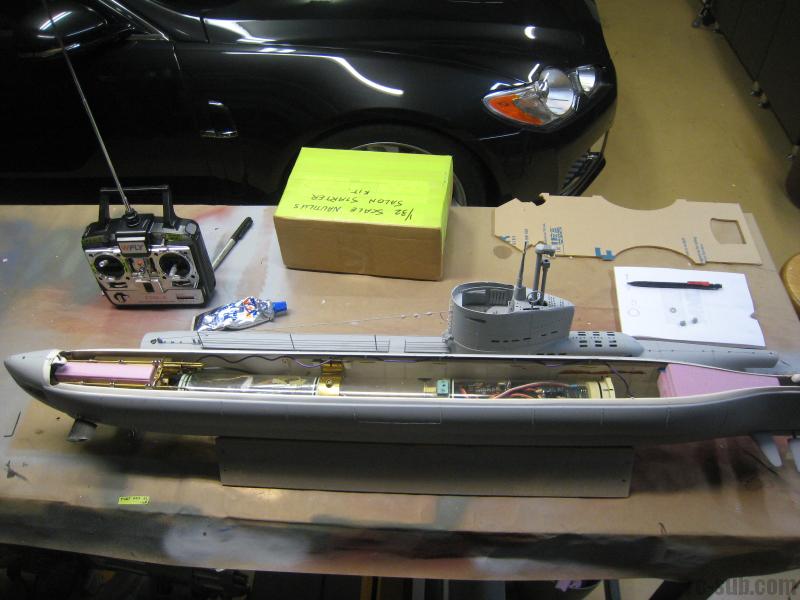
There was also a long strip of foam along the entire length of the upper hull. The model was very statically stable as the righting moment it generated was very decent. You'll notice that I mounted the WTC low in the hull, below centerline. The keel weights were outside the hull along the lower keel, made from two big strips of metal (came with the 32nd Parallel kit).Leave a comment:
-
Just another wild guess here.
Could the foam used to close the main induction flapper valve in the sail be causing the aft end to rise? Then again i bet you'll see this when you dive the boat and observe for any nose down trim.Leave a comment:
-
And the link to my project page: http://rc-sub.com/projects/viewproject.php5?id=54Leave a comment:
-
I'm a real late comer to this party, but thought I'd chime in. I'm pretty sure that Dave saw my Type XXIII build, but here is the link in case anything in there jogs anyone's memory. There is video of underwater running along with a pretty detailed overview of the interior layout:
In my experience, the sub was very controllable both on the surface and submerged. Having a pool definitely helps diagnose issues, so I'm sure you're working at a bit of a disadvantage. I would try fully venting the tank, getting the entire model underwater, shaking the hell out of it to get any and all trapped air out, flipping it upside down just to make sure, and then running it. That will eliminate any trapped air questions and we can move on from there...
[img[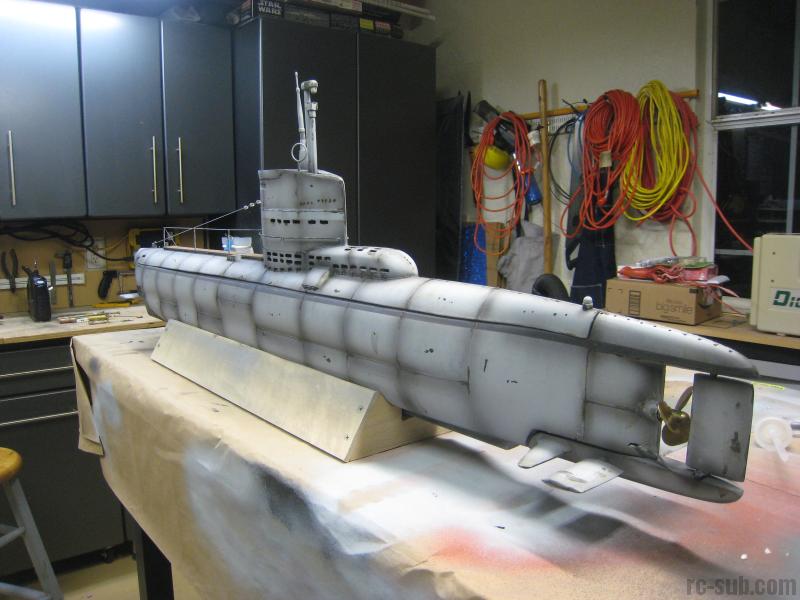 [/img]
Leave a comment:
-
-
Dave,
I think you got my recommendation bass ackwards. I drive the boat via bowplanes only on the right stick. Stern planes only use the angle function from the pitch controller. Not linked to any transmitter input.
Darrin
My previous post:
"Mine ran great using the bow planes for control and the stern with an angle keeper with no override control"Leave a comment:
-
Dave ,you got any pictures of how the ballast weights are placed in hull ? Got a idea , I had to do something to mine I had forgotten about .
JimLeave a comment:
-
Hey, Alec,
Yeah, I've tried that as well. The propeller thrust line is now a bit to the 'rise' as far as its relationship to the boats longitudinal centerline. It was a bit to the 'dive' side, but only by a few degrees before I changed it -- so propeller thrust-line is not the issue.
MLeave a comment:


Leave a comment: